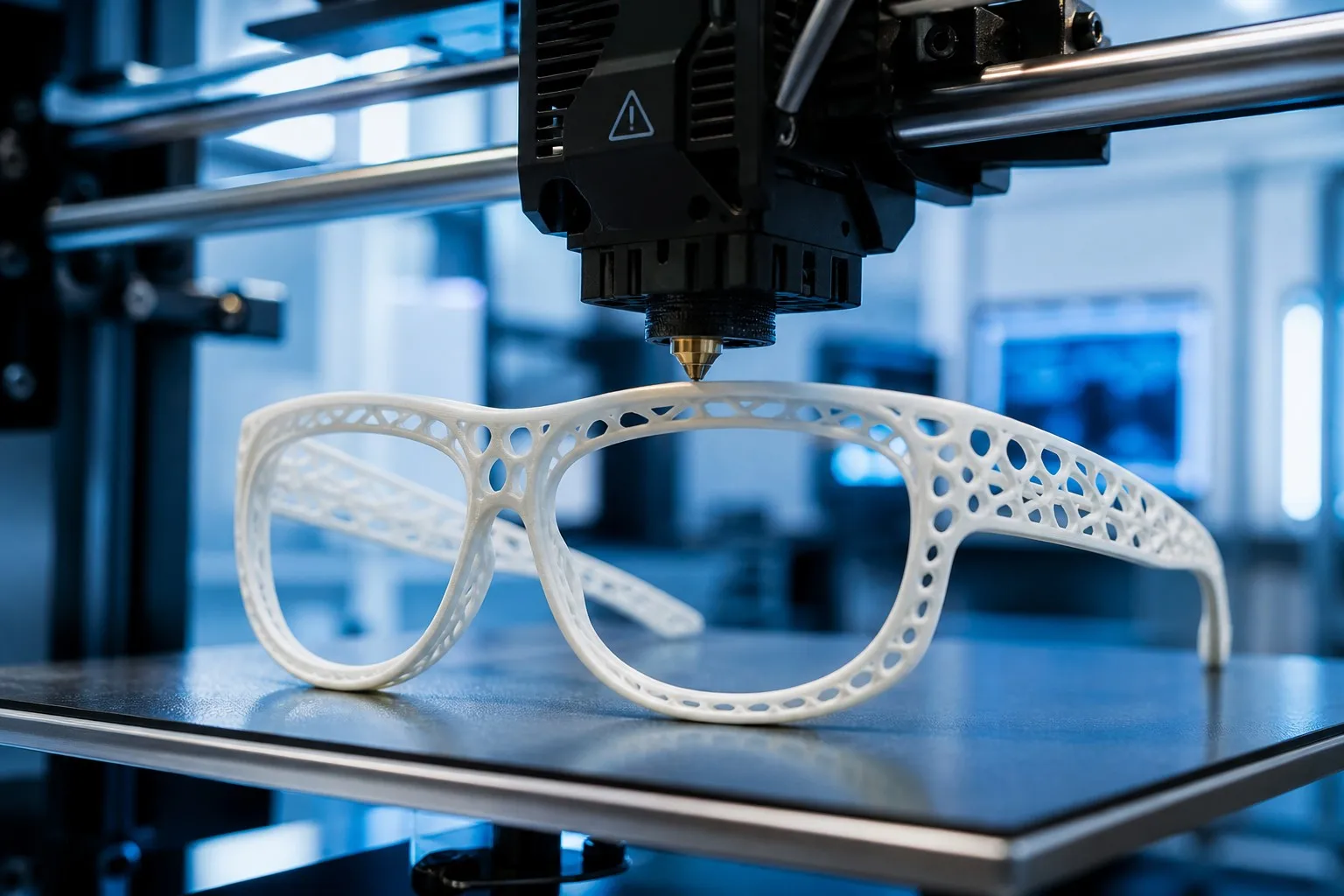
In the rapidly evolving landscape of 2026, manufacturing is no longer just about mass production—it's about precision and personalization. One technology at the heart of this shift is 3D Printing (Additive Manufacturing). What once seemed like a futuristic concept has now become a pillar of high-end, custom eyewear, offering benefits that traditional acetate cutting or metal stamping simply cannot match.
The most significant advantage of 3D printing in eyewear is the ability to create frames that fit a person's unique facial geometry perfectly. By using 3D facial scanning, designers can adjust the bridge width, temple length, and pantoscopic tilt of the glasses to the millimeter. This eliminates common pain points like glasses sliding down the nose or pinching behind the ears.
Traditional manufacturing is limited by what a machine can cut or a mold can release. 3D printing removes these barriers.
Environmental responsibility is a core value for Ajaoptical in 2026. Unlike traditional acetate manufacturing, where up to 70-80% of the raw material is often discarded as waste during the cutting process, 3D printing is additive. It only uses the exact amount of material needed to build the frame, resulting in nearly zero waste. Furthermore, many 3D-printed frames use bio-based nylon (PA11 or PA12) derived from castor oil, making them a sustainable choice.
3D printing enables a "made-to-order" business model. This reduces the need for massive inventories and long-distance shipping from centralized factories. Retailers can now offer a wide variety of styles virtually and only print the physical product once a customer makes a purchase, significantly lowering the industry's overall carbon footprint.
3D printed eyewear is more than just a tech trend; it's a new standard for comfort, creativity, and sustainability. As we move further into 2026, the fusion of optical expertise and additive manufacturing will continue to redefine how we see and how we are seen.
Experience the future of vision. Explore the innovative collections at Ajaoptical today!


