

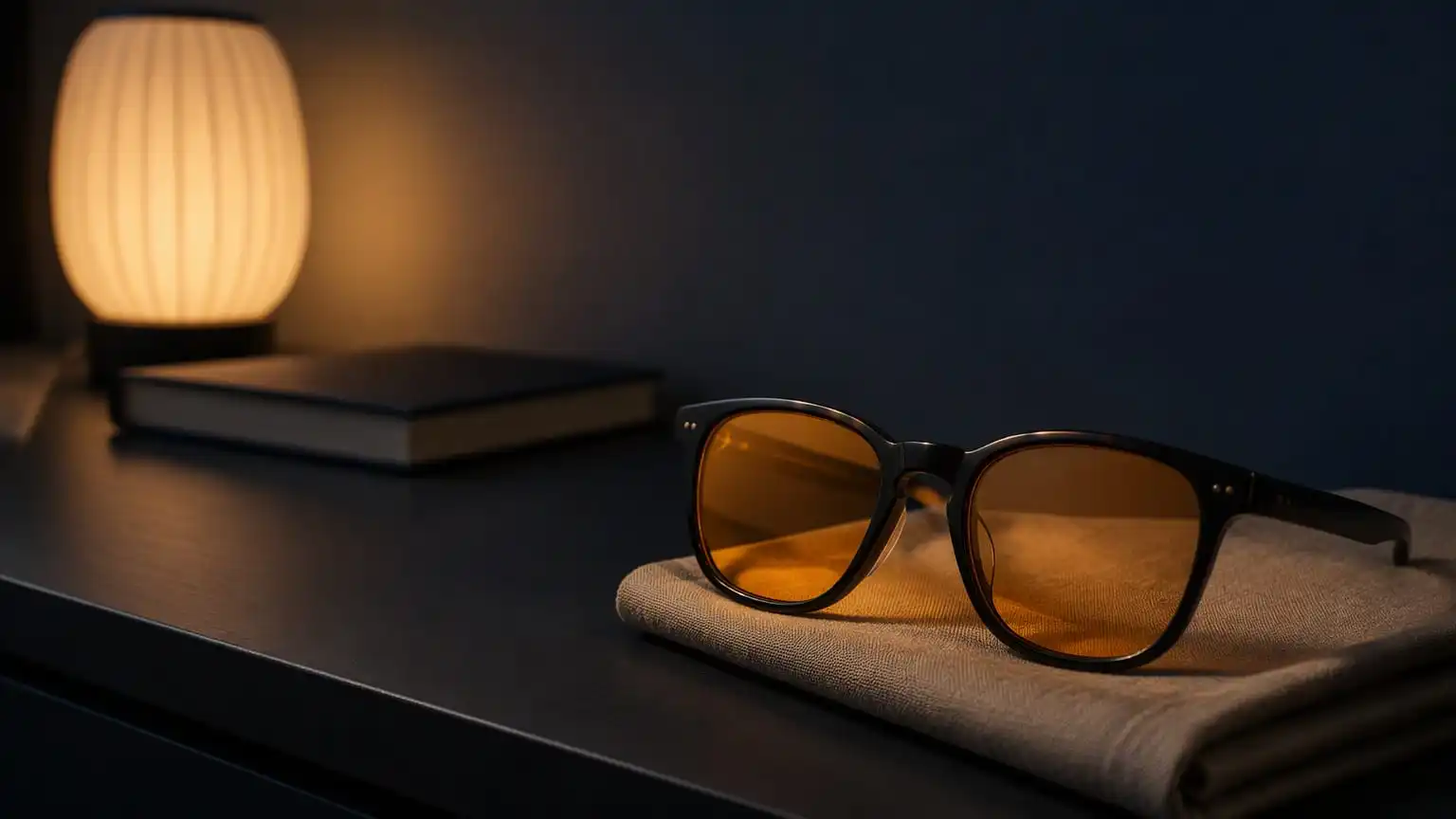
Evening routines are changing as consumers pay closer attention to the light around them before bed. For eyewear brands, this has created a clear opportunity: sleep glasses that combine a comfortable frame, warm-tinted lenses, and a considered user experience.
This article explains the design logic behind sleep-focused eyewear without treating it as a medical device. It also outlines practical points that buyers, optical retailers, and private-label brands should review when developing a new collection.
What Are Sleep Glasses?
Sleep glasses are eyewear products designed for evening use. They commonly feature warm amber or orange-tinted lenses and are positioned as an option for people who want to reduce exposure to visually intense, cool-toned light during their pre-sleep routine.
The category is different from everyday computer glasses. Computer eyewear is usually associated with daytime screen use and visual comfort at work, while sleep-focused eyewear is connected to the wind-down period before bed. The frame, lens tint, fit, and communication should therefore match a calmer evening context.
Why Amber Lenses Are Central to the Category
Amber lenses give sleep glasses their recognizable visual identity. Their warm appearance can make the product feel less clinical and more aligned with a relaxed nighttime routine. For brands, the tint also creates a strong merchandising cue that is easy to understand in product photography and retail displays.
Lens color should be evaluated alongside optical clarity, frame comfort, and the intended usage environment. A good product story should explain the role of the tint clearly, avoid unsupported health promises, and help customers understand when the glasses are designed to be worn.
Four Design Priorities for Sleep-Focused Eyewear
1. Lightweight comfort
Sleep glasses are often worn during reading, relaxing, or screen-free routines. A balanced frame, smooth temple tips, and a comfortable bridge can make the product easier to wear for longer evening sessions.
2. A warm, intentional lens palette
Amber, orange, and other warm lens palettes communicate the product purpose quickly. The final tint should be selected with the frame color, target market, and retail presentation in mind.
3. A shape that fits the routine
Rounded, soft-square, and classic optical silhouettes can all work in this category. The most important factor is a stable fit that feels natural in a home setting and remains visually appealing when photographed for e-commerce.
4. Clear, responsible product communication
Sleep-focused eyewear should be described as a lifestyle and optical product, not as a guaranteed solution for sleep problems. Product pages can focus on evening use, warm lenses, comfort, frame construction, and care instructions.
OEM and ODM Considerations for Sleep Glasses
For retailers and private-label brands, customization starts with a clear product brief. Define the target wearer, preferred frame material, lens tint range, size requirements, logo placement, packaging direction, and expected sales channel before sampling.
An experienced OEM/ODM partner can help translate that brief into a production-ready frame. Sampling should review fit, hinge movement, surface finishing, lens consistency, logo execution, and packaging presentation as one connected product experience.
How to Build a Strong Sleep Glasses Product Story
The strongest product stories connect a real evening scenario with specific design details. Show when the glasses are worn, explain why the lens tone is warm, describe the comfort features that can be verified, and keep the language precise. This approach gives buyers useful information without relying on exaggerated claims.
For B2B collections, the story can also be extended across colorways, frame shapes, and packaging. A consistent visual system makes it easier for retailers to present the range while leaving room for customized branding.
Conclusion
Sleep glasses are an emerging direction for eyewear brands looking to develop products around the evening routine. Warm amber lenses, wearable frame design, responsible messaging, and flexible OEM/ODM development can work together to create a focused collection.
For customized eyewear projects, the next step is to turn the concept into a clear specification covering fit, lens tint, frame construction, branding, and packaging.
