

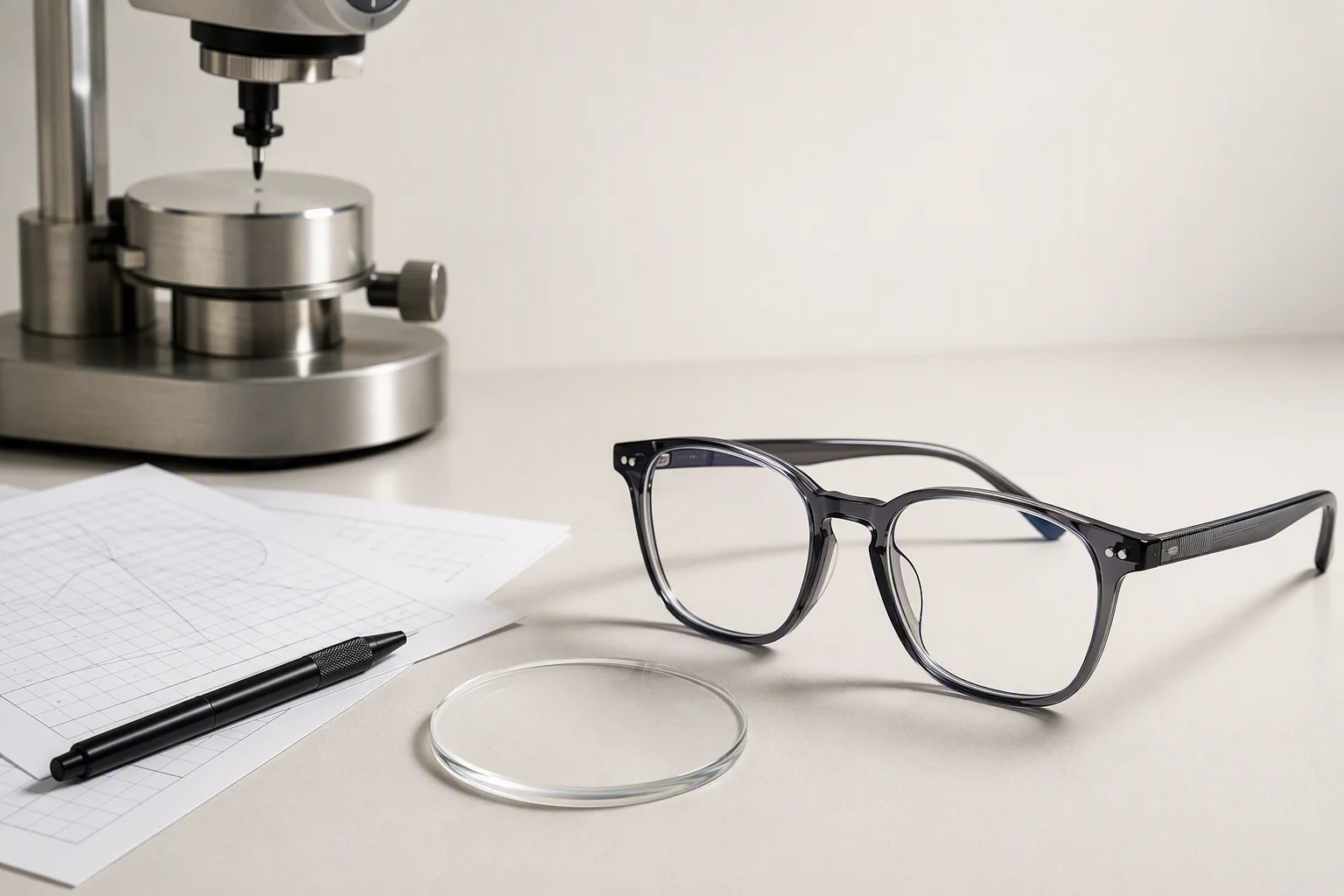
Compliance is part of product planning—not a final paperwork step. For wholesale eyewear buyers, a clear testing and documentation process helps reduce avoidable delays between sampling, bulk production, and market entry. The exact obligations depend on the destination market, product type, lens specification, importer role, and current local rules, so this guide is designed as a supplier-conversation framework rather than legal advice.
Why compliance planning should start before sampling
Many eyewear projects begin with shape, color, and target price. Those decisions matter, but they do not answer whether the finished product can be documented, tested, labeled, and sold in the intended market. When compliance is considered only after production, a buyer may discover that a material, lens option, marking format, or test report does not match the original brief.
A better approach is to define the compliance questions alongside the product brief. Record the intended use, lens type, frame material, packaging information, destination markets, and responsible importer. This gives the supplier and testing partner a shared reference before tooling or bulk purchasing begins.
Build a market-by-market compliance checklist
Do not assume that one document automatically covers every market. Start with a simple matrix that connects each sales destination to the applicable product requirements, evidence, labeling expectations, and document owner.
| Checklist area | Questions for wholesale buyers |
|---|---|
| Product scope | Is the item an optical frame, sunglasses, reading glasses, protective eyewear, or a product with an electronic function? |
| Intended use | What use case and user instructions will appear in the product brief and packaging? |
| Destination | Which markets will receive the same SKU, and will labeling or documents differ by market? |
| Evidence | Which test reports, declarations, technical files, or supplier records must be retained? |
| Ownership | Which party will arrange testing, approve artwork, maintain records, and answer market questions? |
Understand the role of standards, declarations, and test reports
Buyers may encounter market frameworks and references such as CE-related documentation, FDA-related requirements, ANSI Z80.3, UV400 performance language, or other national and regional standards. These references should not be treated as interchangeable labels. Their relevance depends on the product and destination, and the current version or interpretation should be confirmed with a qualified compliance professional, accredited laboratory, importer, or the relevant authority.
Before approving a report, check that the tested sample is traceable to the intended production version. The report should identify the product or sample clearly enough for the buyer to connect it to the SKU, lens configuration, material choice, and manufacturing revision. If the tested sample differs from the production specification, the evidence may not support the finished order.
Five evidence checks before bulk production
- Sample identity: Confirm that the submitted sample matches the planned frame, lens, color, coating, and packaging configuration.
- Test scope: Read the report scope and verify that it addresses the product type and performance questions relevant to the order.
- Traceability: Connect the report to a sample code, product revision, purchase order, or other internal reference used by both parties.
- Document validity: Check issue date, laboratory details, signatures or approvals where applicable, and whether the document is still suitable for the intended market and order.
- Change control: Ask what happens if the supplier changes a material, lens coating, hinge, color, packaging component, or production site.
Questions to ask a customized eyewear supplier
Clear questions reduce ambiguity without turning the first inquiry into a document audit. Add the following points to an OEM or ODM project brief:
- Which product details are fixed for the compliance review?
- Which parts of the product specification can be changed after testing?
- Can the supplier provide a sample that matches the intended bulk-production configuration?
- How are material, lens, coating, hinge, and packaging changes recorded?
- Which documents can be shared before purchase-order approval?
- Who coordinates questions between the factory, testing laboratory, importer, and buyer?
- How will the supplier support a repeat order when the design or production revision changes?
Common mistakes that create avoidable delays
Relying on a generic certificate
A document without a clear connection to the ordered product can create uncertainty. Ask for product identity, scope, and traceability rather than accepting a file only because it contains a familiar keyword.
Changing the product after testing
A new lens option, coating, material, color, hinge, or packaging format may require a review. Treat engineering and artwork changes as controlled revisions, not informal adjustments.
Confusing marketing language with evidence
Terms used in a product title or advertisement do not replace technical documentation. Separate customer-facing claims from the records used to substantiate the product configuration.
Leaving the document owner undefined
Agree early on who stores reports, approves labels, answers questions, and keeps the compliance file aligned with repeat orders. This is especially important for multi-market OEM and ODM programs.
A practical pre-production workflow
- Define: Write the SKU brief, intended use, materials, lens options, destination markets, and packaging requirements.
- Map: Match each destination to the applicable current requirements and evidence needs with qualified support.
- Test: Use a representative sample that reflects the planned production configuration.
- Review: Check report scope, product identity, traceability, labeling, and change-control responsibilities.
- Release: Approve bulk production only after the buyer, supplier, and relevant compliance contact agree on the document set.
- Maintain: Keep a revision record for repeat orders and re-check the requirements when the product, market, or rule set changes.
Final takeaway for wholesale buyers
A reliable eyewear compliance process connects four elements: the product brief, the tested sample, the supporting documents, and the finished production version. Whether you are developing acetate, TR90, titanium, or customized OEM/ODM eyewear, the safest workflow is to identify the market and evidence requirements early, document every meaningful change, and verify current obligations with qualified local support.
For a new custom eyewear project, start with a structured brief that lists the target market, intended use, lens and frame configuration, packaging, testing questions, and document owner. This gives every participant a clearer path from concept to production.

